

Hearing Record
See what the hearing did and did not resolve.
Read a factual summary of the June 11 City Planning Commission hearing, including the unresolved contradictions in the reasoning used to approve Riverwalk.
Read the Hearing Record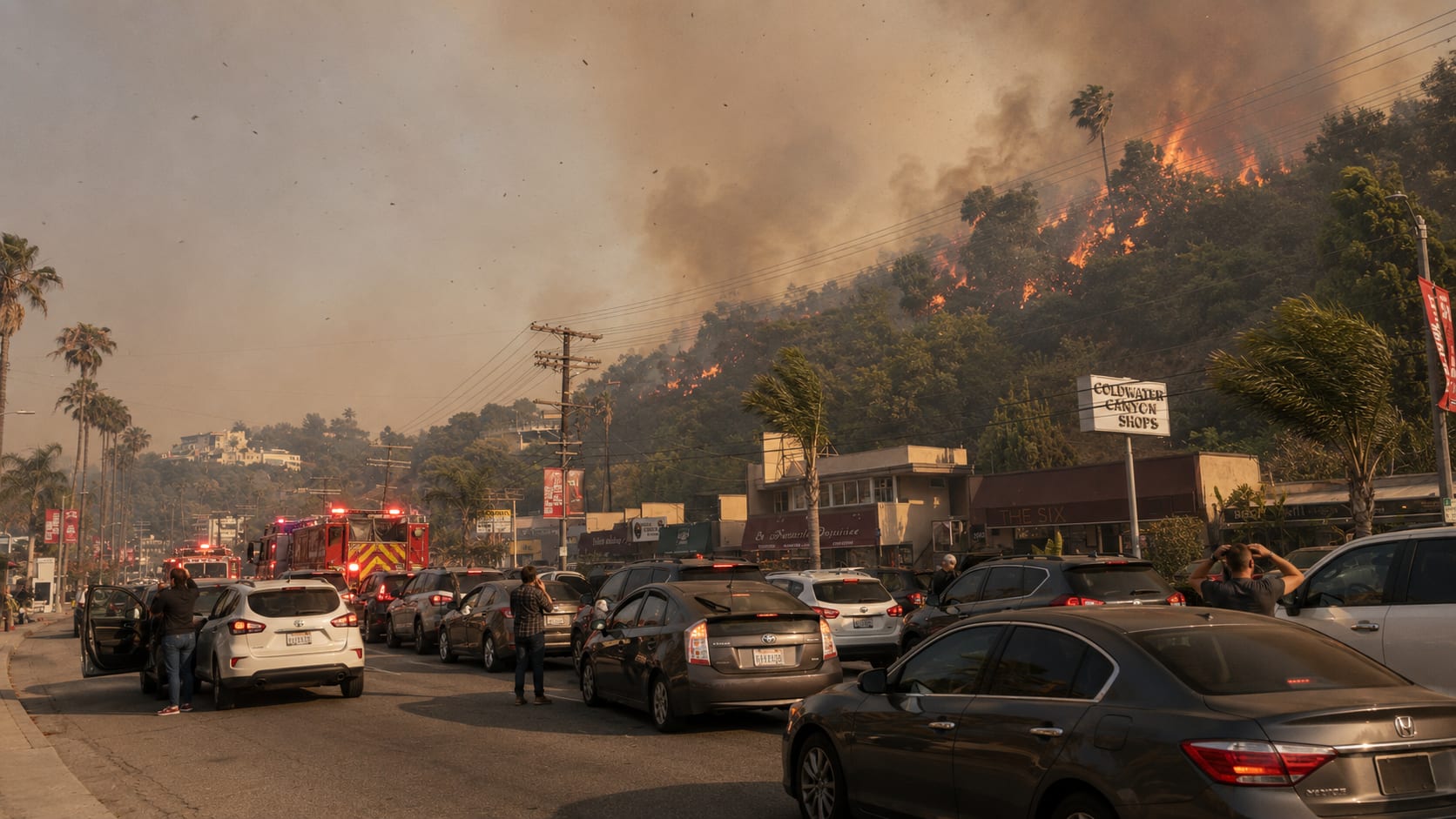
October 21, 2026 | City Council decision
The Los Angeles City Council voted to deny both appeals and uphold the approval of Riverwalk, the 814-apartment project on Ventura Boulevard. Approval does not erase the evidence.
A study in the City's own record found that, before Riverwalk is built, the last vehicles would need more than six hours to clear the modeled area. We could not find a written City analysis of that study in either Council file.
Photo-based simulation of potential emergency evacuation conditions.
On October 21, 2026, the Los Angeles City Council adopted the PLUM Committee's recommendations on both Riverwalk files, 11 to 0, with four members absent. The appeals are denied, and the City Planning Commission's approval stands with the conditions added in October.
Those conditions add $675,000 in developer contributions and up to 23 shade trees. None of it is directed to evacuation access on the hillside streets south of Ventura Boulevard, and no condition requires a corridor evacuation analysis.
The vote is confirmed in the City Clerk's records. The official journal of the October 21 meeting had not been published when we checked.
The vote decided the appeals. It did not answer the evacuation question.
What is the City actually evaluating?
Both figures are in the Riverwalk record. They measure different things and should not be read as two estimates of the same event. That difference is the point.
Time for the project’s own 1,040 residential vehicles to clear a segment of Ventura Boulevard, with two outbound lanes available to them.
The study says this estimate “represents only vehicles associated with the Project.”
Modeled time for the last of about 114,000 vehicles from Studio City and surrounding neighborhoods to clear the modeled area when everyone leaves at once, before Riverwalk is built.
Add Riverwalk and Sportsmen’s Lodge residents, and modeled vehicles in the evacuation zone that contains Riverwalk rise about 41 percent. The last of them take 27 minutes longer.
“The additional analysis provided by the Jensen Hughes study does not change the Planning Department’s ability to make the findings required for project approval.”
Council District 4 Planning and Community Development Director, email to a resident, October 19, 2026
We could not find a written City analysis of the Jensen Hughes findings in either Council file.
City Planning’s written response to the planning appeal is dated October 5, three days before the study, and does not mention it.
A conclusion is not an analysis. The Council has voted, and the City’s written answer to this study is still missing from the record we reviewed.
The PLUM Committee added these conditions on October 13, and the City Council adopted the committee's recommendations on October 21. City Planning filed corrected tract map conditions on October 20, stating that the previous version contained an error.
How will residents of the hillside streets reach safety while new residents and fire crews need the same corridor?
Council District 4 says AB 130 leaves the City unable to impose additional requirements on this project at this stage. That limits what the City can require of the applicant. It does not stop the City from studying the corridor itself.
A building can have emergency exits, fire lanes and safety systems.
But an emergency does not end when residents reach the sidewalk.
They still need to use the surrounding streets.
Those streets also serve existing neighborhoods, local businesses and emergency responders.
Ventura Boulevard is especially important to hillside communities south of the project.
We want to know how the City has accounted for these combined demands during a major emergency.
Meeting building-level fire access requirements does not, by itself, establish neighborhood-wide evacuation capacity.
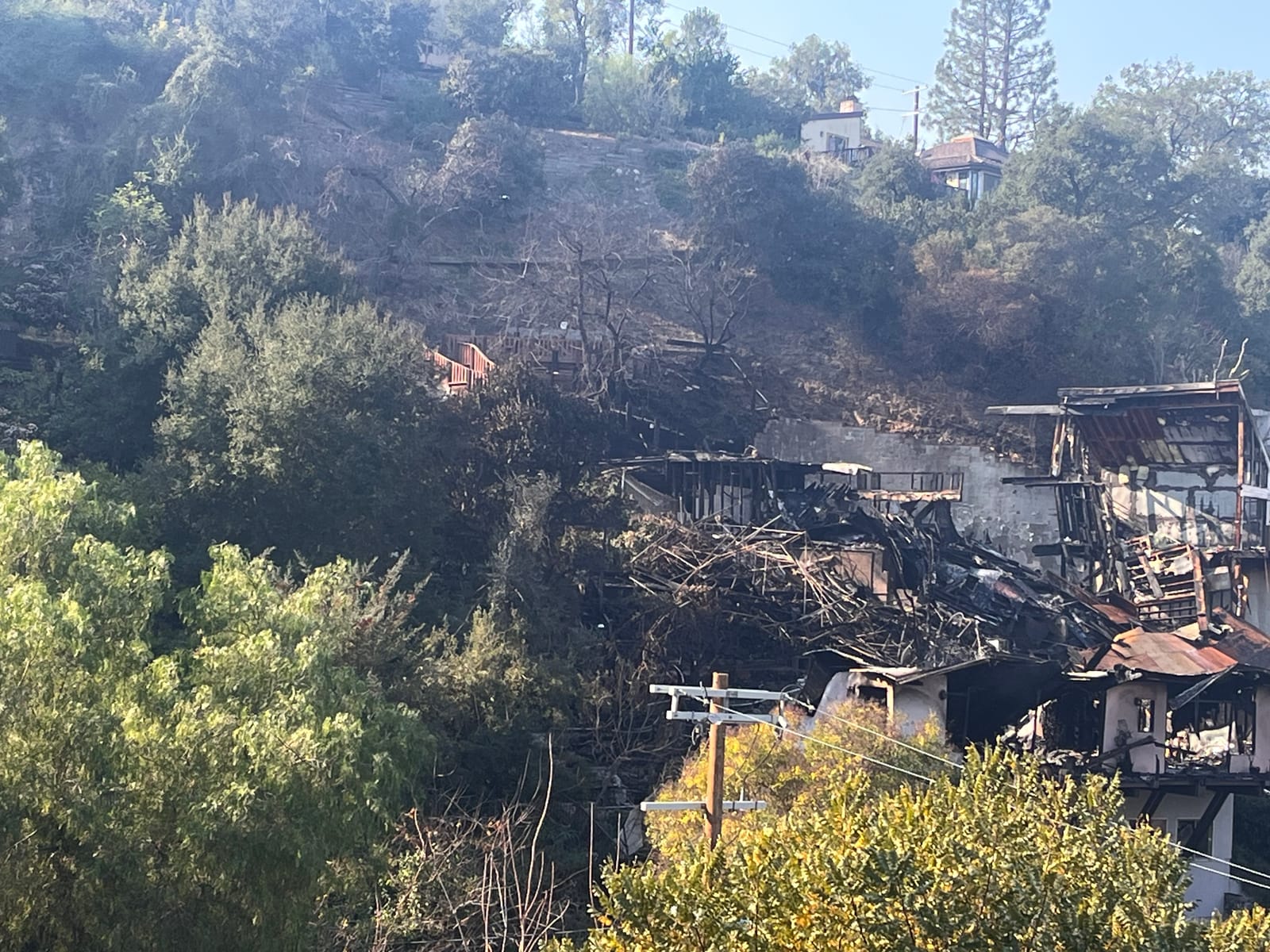
We tear down small homes and we build up these large apartment buildings. We're congesting our streets with more vehicles because the people live there and they're driving.
And as much as we'd like to think that rapid transit and ways of traveling in multiple groups is going to fix things, we know that the congestion of our streets is affecting law enforcement to get to where they need to go and fire to get to where we need to go.
Chief Jaime E. Moore, Los Angeles Fire Department
That warning is exactly why Studio City for Safe Development is focused on public safety first. More units, more vehicles, more construction, and more corridor pressure must be evaluated through the lens of emergency response and evacuation, not just standard development math.
Responsible development
The Riverwalk site needs redevelopment.
New housing, better access to the Los Angeles River, public open space, native landscaping and shade trees could benefit Studio City.
We recognize those benefits.
But they do not eliminate the need to understand emergency access and evacuation capacity for the surrounding community.
Responsible development must account for the people who will live in the project and the neighborhoods already here.
Riverwalk only
These figures describe Riverwalk only. They do not include Sportsmen's Lodge, Sunswept Place, or any other nearby project.
Riverwalk is not a small infill project. It is a massive mixed-use development proposed for a constrained Studio City corridor already facing fire, evacuation, traffic, environmental, and construction pressure.
Cumulative corridor context
Riverwalk is not happening alone. The half-mile stretch from Whitsett Avenue to Coldwater Canyon Avenue is facing overlapping development pressure from Riverwalk, Sportsmen's Lodge, and Sunswept Place, with each project adding residents, traffic, construction, and commercial activity to the same constrained evacuation corridor.
Project figures are drawn from public planning records. Infrastructure capacity has not been publicly demonstrated on a cumulative corridor basis.
In Studio City for Safe Development's view, concentrating this much new, largely market-rate housing on a single half-mile corridor, already strained and inside a Very High Fire Hazard Severity Zone, is a public-safety question. These are substantive planning critiques, not reflexive local resistance.
Account for existing residents, the new development and surrounding neighborhoods.
Explain the methods and assumptions behind evacuation and emergency access conclusions.
Consider how residents south of Ventura Boulevard would reach evacuation routes while emergency vehicles need access.
Publish clear explanations of project requirements and their intended effects.
Safety should be demonstrated before it is assumed.
Hearing Record
Read a factual summary of the June 11 City Planning Commission hearing, including the unresolved contradictions in the reasoning used to approve Riverwalk.
Read the Hearing RecordMedia
See the Spectrum News report on Sunswept, fire footage from the corridor, and photo evidence from fire disasters and local site activity.
Watch MediaOn October 21, 2026, the Los Angeles City Council adopted both Riverwalk items, denying the appeals and upholding the approval with the conditions added in October. The vote was 11 to 0, with four members absent. The evacuation questions remain.
Council District 4 told a resident that the Jensen Hughes evacuation study does not change the Planning Department's ability to make the findings required for approval. We could not find a written City analysis of the study in either Council file.
On October 13, 2026, the City Council's Planning and Land Use Management Committee denied both appeals concerning Riverwalk at Studio City and recommended that the full Council sustain the Planning Commission's approval, with added conditions.
We will keep reviewing the public record, publishing what we find and pressing for a written answer on evacuation safety.
Sign up for campaign updates and newly published public records.